
Cholera Outbreak Investigation in Narok County, October 2025
On September 23, 2025, Narok County reported a cluster of acute watery diarrhoea cases in Kilgoris Central and Shankoe wards in Transmara West sub-county, with one case in Lolgorian ward of Transmara South sub-county. As of October 3, 2025, 31 cases of acute watery diarrhoea and 4 deaths (CFR: 12.9%) had been reported across 14 villages in three wards: Kilgoris Central (12 cases), Shankoe (18 cases), and Lolgorian (1 case). The cases presented with diarrhoea, vomiting, and dehydration and were treated at Trans-Mara West Sub-County Hospital. A rapid cholera test was performed on 10 cases on September 28 and September 29, and 9 tested positive for cholera. A PCR test for cholera was performed on 6 cases on September 29, and all tested positive.
Following the National Division of Disease Surveillance and Response (DDSR) notification on October 4, 2025, a national multidisciplinary team was formed to support the county's response. The team comprised representatives from county and national levels including from Kenya FELTP, Disease Surveillance and Response Unit, Microbiology, and Environmental Health (WASH), and the Narok county. The objectives of the investigation were to:
- Confirm the existence of an outbreak of acute watery diarrhoea
- To determine the magnitude of the outbreak in Narok County
- To identify potential risk factors contributing to transmission
- To assess preparedness and response measures in the county
- To evaluate the outbreak response using the 7-1-7 framework

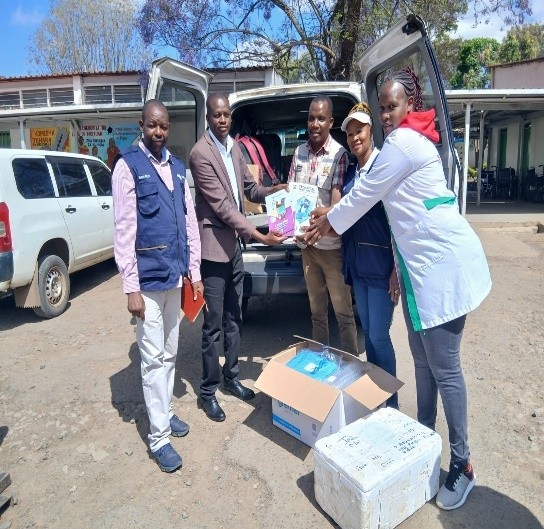
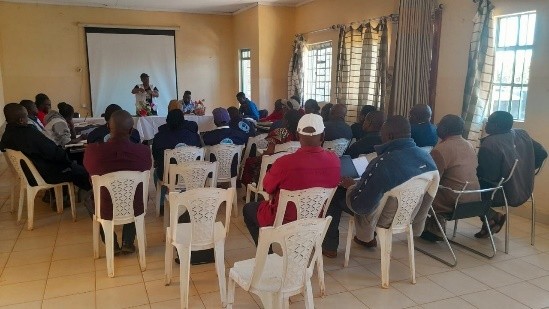
The investigation targeted the affected villages in Transmara West sub-county and Transmara South sub-county, and was conducted from October 8–16, 2025. It confirmed cholera caused by Vibrio cholerae Ogawa through laboratory culture at the National Public Health Laboratories. Environmental assessments revealed widespread contamination of local water sources. Community interviews further indicated that most households consumed untreated water, significantly increasing the risk of disease transmission.
The findings from this investigation underscore the need for strengthened water, sanitation, and hygiene (WASH) interventions, improved access to safe drinking water, enhanced community awareness, and continued surveillance to prevent future outbreaks.